Gero Onsen Without a Car: A Hot-Spring Town on the Hida Line
A hot-spring town on the train line between Nagoya and Takayama, with a public bath and free footbaths a walk from the station.
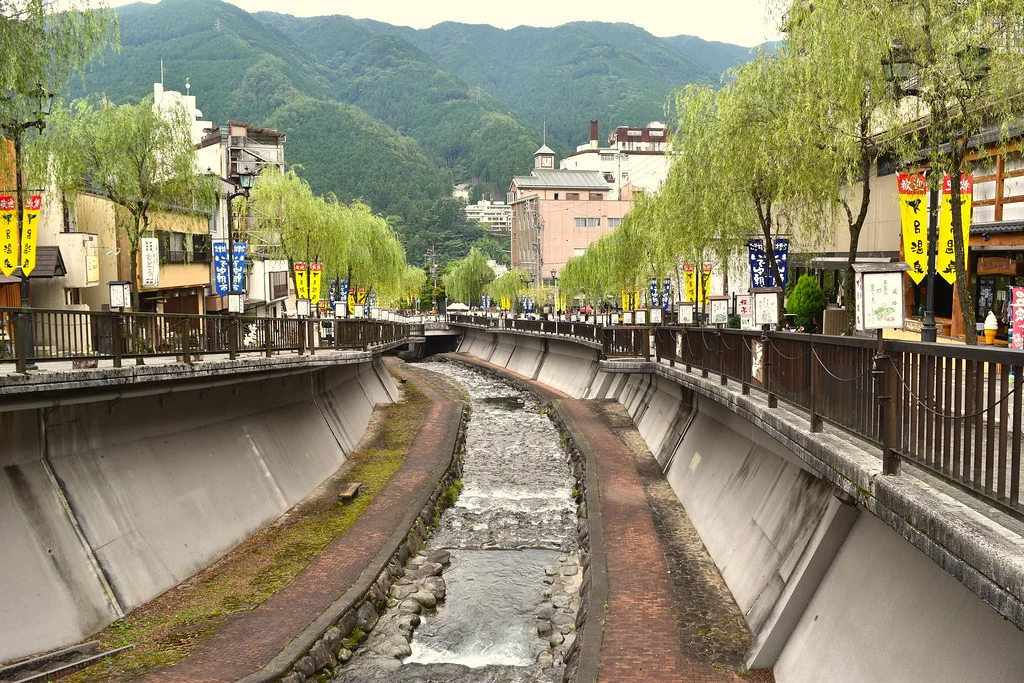
The riverside walk through Gero Onsen. Photo: okoysm / flickr.com / CC BY 2.0
- Gero is on the JR Takayama Line between Nagoya and Takayama. JNTO gives about 1 hour 45 minutes from Nagoya on the limited express Hida, and JR Central about 45 minutes to 1 hour from Takayama.
- The public bath, Shirasagi-no-Yu, is about 12 minutes on foot from Gero Station and costs ¥470 for adults, cash only. Six footbaths in town are free, and two of them are open 24 hours.
- A Yumeguri Tegata pass, ¥2,500, gets you into the baths of three member inns within 6 months; those baths turn away guests with tattoos.
Come by the Hida train, walk to the baths and keep Takayama for the next stop.
The public bath, the footbaths and Gassho Village are all within a walk of Gero Station, so you do not need a bus or taxi in town.
Gero sits on the same line as Takayama, so it works as an overnight stop between Nagoya and Takayama.
- 1Hida train from NagoyaAbout 1 hr 45 min
- 2Train from TakayamaAbout 45 min – 1 hr
- 3Inn bus from NagoyaMember-inn guests only, book 2 days ahead
- Prefecture
- Gifu
- From Nagoya
- Limited express Hida, about 1 hr 45 min
- From Takayama
- About 45 min – 1 hr by train
- Public bath
- Shirasagi-no-Yu, about 12 min on foot
From Gero Station, without a car
- Shirasagi-no-YuPublic hot-spring bath, ¥470, cash only12 min
- Gero Onsen Gassho VillageThatched farmhouses, ¥80020 min
- Gassho Village by busFrom the bus center, ¥100 (2023 figure)6 min
- TakayamaJR Takayama Line45 min – 1 hr
- Magome and TsumagoNohi Bus, Apr 1 – Nov 30, 2026, ¥4,0001 hr 33 min
Times and prices checked October 25, 2026.
Gero Onsen is a hot-spring town in Gifu Prefecture, on the JR line between Nagoya and Takayama. You can reach it by train, and the public bath, the footbaths and Gassho Village are all a walk from the station. This guide covers how to get there, where to bathe, what you can see on foot and the day trips from Gero.
Times, prices and opening hours below come from official pages (JNTO, JR Central, the Gero Onsen Ryokan Cooperative, Gero City, Nohi Bus, the bath and museum operators and the Japan Meteorological Agency), checked on October 25, 2026. The Gero Onsen Tourism Association's own website has been offline since October 22, 2026, so a few things are listed as not checked at the end.
Why go to Gero Onsen
Gero City says the Edo-period scholar Hayashi Razan named Gero, with Arima and Kusatsu, one of the "three famous hot springs" of Japan. The city describes the water as an alkaline simple spring.
For a car-free trip, the draw is that the town is compact. The public bath is about 12 minutes on foot from the station, and six footbaths in town are free. It also sits on the same train line as Takayama, so it fits a route between Nagoya and the Japanese Alps. The city had 27,798 residents on October 1, 2026.
Getting to Gero without a car
From Nagoya: the Hida train
JNTO gives about 1 hour 45 minutes from Nagoya Station to Gero on the limited express Hida. From Tokyo or Osaka, take the Shinkansen to Nagoya and change there. JR Central's ticketless express fee from Nagoya to Gero is ¥2,390 for a reserved seat in the regular season; you also need a separate base fare ticket, which I have not checked.
From Takayama: the same line, south
JR Central puts the train from Takayama to Gero at about 45 minutes to 1 hour. For the town at the other end, see my Takayama guide.
The inn bus from Nagoya
The Gero Onsen Ryokan Cooperative runs a direct bus between Nagoya and Gero, but only for guests of its member inns.
- Times: one round trip a day, Nagoya 14:00 → Gero about 16:30, and Gero 10:30 → Nagoya about 13:00.
- Fare: ¥3,300 one way or ¥4,500 return until November 30, 2026; ¥3,800 one way or ¥5,000 return from December 1, 2026 to March 31, 2027.
- Booking: reservation only, from 2 months before and at least 2 days before you ride.
- Where: in Nagoya, outside the Taiko-dori exit of JR Nagoya Station, where there is no bus-stop sign; in Gero, behind the Gero tourist information center. The cooperative asks you to be there 15 minutes early.
Nohi Bus's list of highway buses has no service between Nagoya or Shinjuku and Gero.
From Magome and Tsumago: the Nohi Bus
Nohi Bus runs one bus a day each way between Takayama, Gero and Magome–Tsumago from April 1 to November 30, 2026. It leaves the Gero bus center at 9:10 and Gero Station at 9:12 and reaches Magome at 10:45 and Tsumago at 11:10. Coming back, it leaves Tsumago at 15:00 and Magome at 15:25 and reaches the Gero bus center at 16:48 and Gero Station at 16:50. The fare from Gero is ¥4,000, and seats must be reserved, by phone at the Nohi Bus Reservation Center or through Japan Bus Online. For the walk between the two post towns, see my Magome to Tsumago hike guide.
Getting around Gero on foot
- Shirasagi-no-Yu: about 12 minutes on foot from Gero Station.
- Gero Onsen Gassho Village: about 20 minutes on foot. Its access page also gives a 6-minute bus from the bus center for ¥100, but that page is dated October 2023, so check the bus before you rely on it.
- The footbaths: the two open 24 hours are next to the central parking lot and next to Gero City Hall; the others are listed below.
Hot springs in Gero
Shirasagi-no-Yu, the public bath
- Hours: 10:00–20:45, last entry 20:00.
- Closed: Wednesdays, or Friday when Wednesday is a holiday.
- Price: ¥470 for adults. It does not take cards or other cashless payment.
- Bring: your own soap and shampoo; there are none in the bath. Towels are sold for ¥250 and bath towels for ¥600, and there is no rental.
A set ticket for Shirasagi-no-Yu, the Kua Garden open-air bath and Gero Hatsu Onsen Museum costs ¥1,300 for adults instead of ¥1,670. The Kua Garden open-air bath is open 8:00–20:45, last entry 20:00, and closed on Thursdays, according to the ryokan cooperative's table dated October 1, 2025.
The Yumeguri Tegata bath pass
The Gero Onsen Ryokan Cooperative sells the Yumeguri Tegata, a bath pass, for ¥2,500. It gets you into the baths of three member inns, and it is valid for 6 months from purchase. The cooperative says its member inns sell it, apart from a few it marks on its list.
- It is for bathing only; there is no rest area.
- Bring your own bath towel.
- Guests with tattoos are not allowed in the baths.
- There are no refunds once you buy it.
The cooperative's table of bathing hours is dated October 1, 2025, and it warns that baths can be limited on busy days, so call the inn before you go.
Free footbaths
The ryokan cooperative lists nine footbaths. One, Geroma, is closed for now, and two are inside paid sights: Gassho Village (admission ¥800) and the onsen museum (¥400). The other six are free:
| Footbath | Where | Hours |
|---|---|---|
| Sagi no Ashiyu | Next to the central parking lot | 24 hours |
| Ta no Kami no Ashiyu | Next to Gero City Hall | 24 hours |
| Venus no Ashiyu | In front of Shirasagi-no-Yu | 10:00–21:00, closed when the bath is |
| Yuamiya no Ashiyu | By Shirasagi Bridge | 9:00–18:30, can change |
| Sarubobo Ogon Ashiyu | At Sarubobo Shichifuku Shrine | 9:00–21:00 |
| Miyabi no Ashiyu | By the entrance of Gero Royal Hotel Gatei | 7:00–22:00 |
Gero City says Funsenchi, the riverside pool that used to allow bathing in a swimsuit, became footbath-only from December 1, 2021.
Things to see in Gero
- Gero Onsen Gassho Village: an open-air museum of thatched gassho-style farmhouses. Open 8:30–17:00, last entry 16:30, every day (9:00–16:00 from December 31 to January 2). Adults ¥800, children ¥400.
- Gero Hatsu Onsen Museum: a museum about hot springs. Open 9:00–17:00, last entry 16:30; closed on Thursdays (on Friday when Thursday is a holiday). Adults ¥400.
For the bus from Takayama to Shirakawa-go, see my Shirakawa-go guide.
Day trips from Gero
Takayama — by train
About 45 minutes to 1 hour north on the JR Takayama Line. For other hot springs in Takayama and the mountain villages, see my Takayama onsen guide.
Magome and Tsumago — April 1 to November 30, 2026
The 9:12 Nohi Bus from Gero Station reaches Magome at 10:45, and the 15:00 from Tsumago reaches Gero Station at 16:50. Book a seat ahead.
Gujo Hachiman — by train
Nohi Bus's list of highway buses shows no bus from Gero to Gujo Hachiman. By train, go south on the JR line to Mino-Ota, then take the Nagaragawa Railway: its own times add up to about 1 hour 15 minutes from Mino-Ota to Gujo-Hachiman. I have not checked the JR leg from Gero to Mino-Ota. The details are in my Gujo Hachiman guide.
Where to stay in Gero
If you want the inn bus from Nagoya or the Yumeguri Tegata, stay at one of the Gero Onsen Ryokan Cooperative's member inns: the bus is only for their guests, and the pass is sold at member inns. The public bath, Gassho Village and the free footbaths are all within a walk of the station, so an inn in town works without a car. I have not checked how far each inn is from the station; ask the inn before you book.
Seasons in Gero
The climate normals here come from the Hagiwara weather station, in Gero City at 425 m, not in the onsen town itself. In the 1991–2020 normals from the Japan Meteorological Agency, January there averages 0.6°C, with daily highs of 5.1°C and lows of −2.8°C. August averages 24.8°C, with highs of 31.1°C. Rain is heaviest in July, at 445.6 mm, out of 2,588.8 mm a year. The station does not measure snow.
- The Gero Onsen Tourism Association's website, offline since October 22, 2026
- Onsen-ji temple, festival and fireworks dates for 2026–27, and the tourist information center's hours
- Coin lockers and luggage storage at Gero Station
- The base fare from Nagoya to Gero, and the train time from Gero to Mino-Ota
- Whether Shirasagi-no-Yu or the Kua Garden open-air bath admits guests with tattoos
- Buses to Gero from companies other than Nohi Bus, such as Gifu Bus or JR Tokai Bus
- How Funsenchi is used now; the city's page dates from 2021
How I checked this
- Read the train pages of JNTO and JR Central, and Nohi Bus's highway bus and Magome–Tsumago pages.
- Read the Gero Onsen Ryokan Cooperative's pages on the direct bus, footbaths and bath pass, and the pages of Shirasagi-no-Yu, Gassho Village, the onsen museum, Gero City, the Nagaragawa Railway and JMA.
- Matched every value to a dated source; anything I could not confirm is listed above.
Getting to Gero Onsen from Tokyo or Osaka
Shinkansen to Nagoya, then the limited express Hida, about 1 hour 45 minutes from Nagoya.
Shinkansen to Nagoya, then the limited express Hida, about 1 hour 45 minutes from Nagoya.
More on the route
Frequently asked questions
How do I get to Gero Onsen without a car?
By train. JNTO gives about 1 hour 45 minutes from Nagoya Station on the limited express Hida, and JR Central gives about 45 minutes to 1 hour from Takayama. Nohi Bus runs no highway bus between Nagoya or Shinjuku and Gero; the direct bus from Nagoya is only for guests of the Gero Onsen Ryokan Cooperative's member inns.
Can I walk from Gero Station to the baths?
Yes. Shirasagi-no-Yu, the public bath, is about 12 minutes on foot from Gero Station, and Gero Onsen Gassho Village about 20 minutes. Gassho Village also lists a 6-minute bus from the bus center for ¥100, a figure dated October 2023.
How much is the public bath in Gero?
Shirasagi-no-Yu costs ¥470 for adults and takes cash only. It is open 10:00–20:45 with last entry at 20:00 and closes on Wednesdays (on Friday when Wednesday is a holiday). There is no soap or shampoo, and towels are sold for ¥250 (bath towels ¥600).
What is the Yumeguri Tegata?
A bath pass from the Gero Onsen Ryokan Cooperative, sold for ¥2,500. It lets you bathe at three member inns within 6 months of purchase. It is for bathing only, with no rest area; bring your own bath towel, and guests with tattoos are not allowed in the baths.
Is Gero Onsen a day trip from Takayama?
Yes. JR Central puts the train from Takayama to Gero at about 45 minutes to 1 hour, and the public bath is about 12 minutes on foot from Gero Station.
Keep planning
Sources
- Gero Onsen — JNTO
- Takayama and Gero: craftsmanship and onsen — JR Central
- Limited express ticketless service — JR Central
- Gero Onsen direct bus (Nagoya) — Gero Onsen Ryokan Cooperative
- Footbaths — Gero Onsen Ryokan Cooperative
- Yumeguri Tegata — Gero Onsen Ryokan Cooperative
- Yumeguri Tegata: bathing manners — Gero Onsen Ryokan Cooperative
- Shirasagi-no-Yu — Shirasagi-no-Yu
- Gero Onsen Gassho Village (hours and admission) — Gero Onsen Gassho Village
- Gero Onsen Gassho Village (access) — Gero Onsen Gassho Village
- Gero Hatsu Onsen Museum — Gero Hatsu Onsen Museum
- Gero Onsen (history and spring) — Gero City
- Funsenchi — Gero City
- Population — Gero City
- Takayama・Gero Onsen – Magome・Tsumago line — Nohi Bus
- Highway buses — Nohi Bus
- Access — Nagaragawa Railway
- Climate normals, Hagiwara (1991–2020) — Japan Meteorological Agency