Hakuba Without a Car: How to Get There and Get Around
A ski village under the Northern Alps that you can reach from Tokyo by train and bus, and get around by shuttle, demand taxi and taxi.
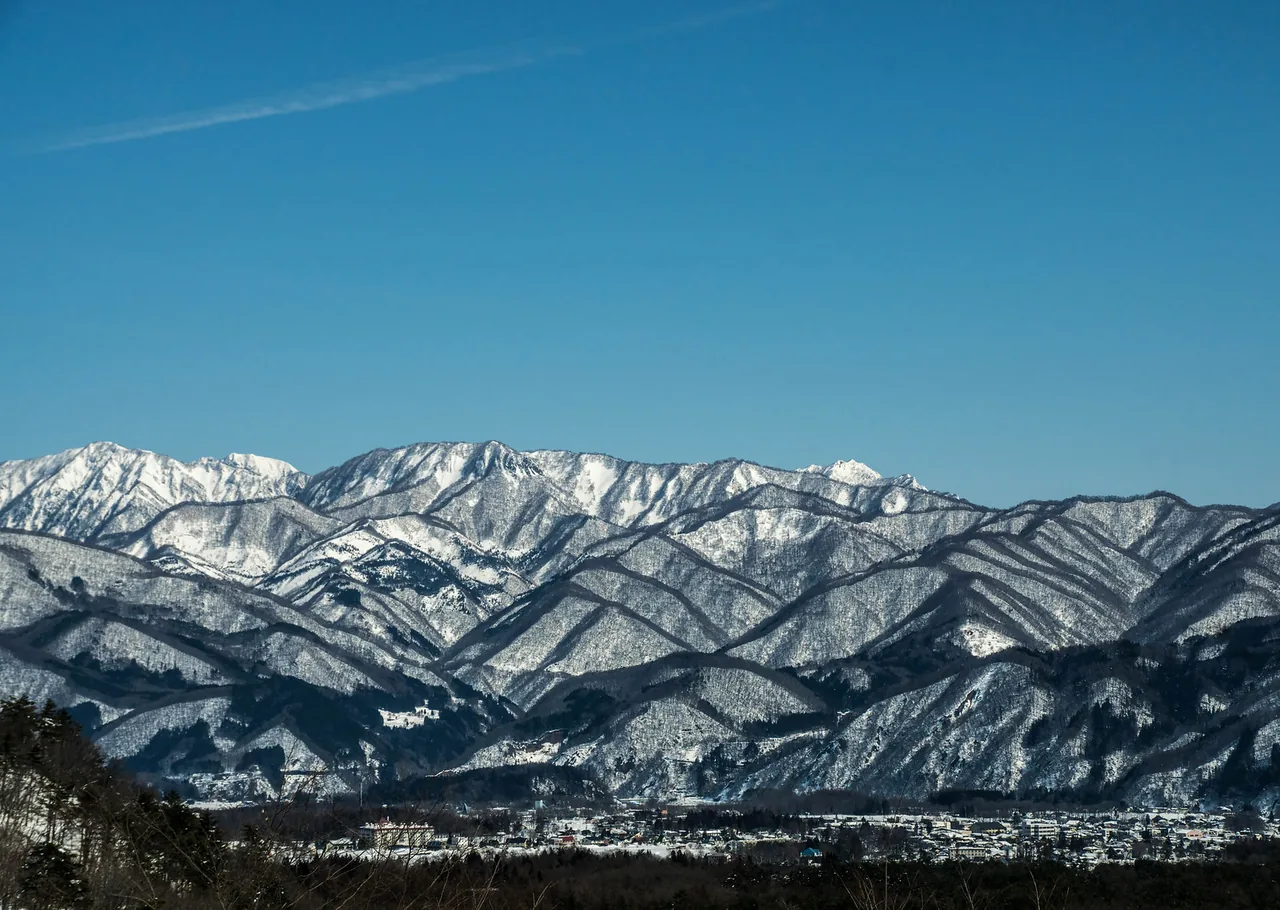
The mountains above Hakuba in February. Photo: Petra Bensted / flickr.com / CC BY 2.0
- The simplest way in is the Shinkansen to Nagano, then the Alpico express bus to Hakuba Happo for ¥2,900 (fare table planned to run until November 30, 2026). The bus takes 1 hour 10 minutes to 2 hours 5 minutes, depending on the stop.
- Last winter the Nagano – Hakuba route had both reservation-only and non-reserved buses; the 2026–27 winter timetable and fare had not been published on October 20, 2026.
- Inside the village, a ¥300 shared demand taxi runs all year from 8:00 to 17:00, and in 2025–26 winter shuttles linked the ski areas, so choose your lodging by its distance to a stop.
Take the Shinkansen and the Nagano bus, and stay near a stop.
On its current timetable, the Alpico express bus from Nagano Station stops at Hakuba Station and Hakuba Happo, and needs no reservation from April to November.
Book a room within walking distance of a shuttle stop or Hakuba Station. That one choice decides whether you need taxis every day.
- 1Shinkansen + Nagano bus¥2,900 to Hakuba Happo until Nov 30, 2026
- 2Azusa 5 from ShinjukuEvery day, 3 hr 40 min, no change
- 3Oito Line from MatsumotoAll year; Jan – Mar timetable not confirmed
Hakuba is a village of ski areas spread along a valley in the northern Japanese Alps, and you can reach it and move around it without driving. This guide covers why to go, the ways in from Tokyo, Osaka, Nagano and Matsumoto, how to get between the ski areas, what each piece costs, where to stay, the seasons and what the village publishes for people thinking of moving there.
Fares, timetables and rules below come from the operators' own pages (Alpico, JR East, Hakuba Village, Hakuba Valley, Happo-one, the Japan Meteorological Agency and Yamato), checked October 15–20, 2026. The winter bus and shuttle details for 2026–27 had not been published on October 20, 2026, so the winter rows show last winter's pattern and say so.
Hakuba sits at the north end of the car-free corridor described in my Japanese Alps without a car guide.
Why go to Hakuba
You can reach Hakuba from Tokyo without driving, by Shinkansen and bus via Nagano or on the Azusa 5 straight from Shinjuku, and get around it by shuttle, demand taxi and taxi.
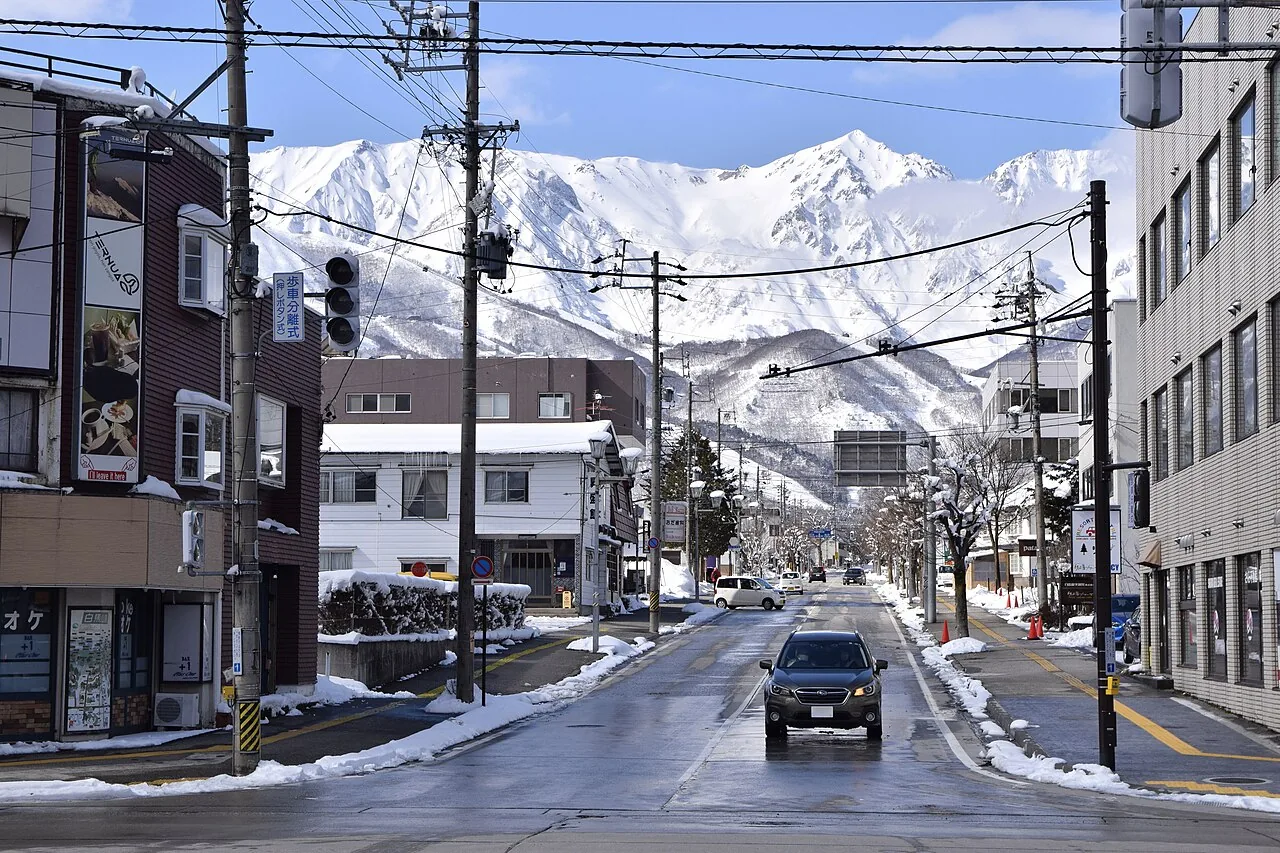
Hakuba Village lies in the northwest of Nagano Prefecture, at the foot of the 3,000-meter peaks of the Northern Alps. It is part of Hakuba Valley, the name for the ten ski areas spread across Omachi, Hakuba and Otari.
- Lodging history: in 1937, 16 households in Hosono began taking in guests as minshuku, and in 1952 the village's first ski lift opened at what is now Iwatake.
- 1998 Olympics: Hakuba was a main venue of the Nagano Winter Olympics, for alpine speed events, cross-country, ski jumping and Nordic combined.
- Outside winter: the Happo Alpenline lifts run from June 6 to November 3, 2026, for summer and autumn visitors.
These points come from pages by Hakuba Village, Hakuba Valley and the Happo-one ski area, checked October 20, 2026.

Swipe sideways to see the whole diagram →
Getting to Hakuba
There are three ways in without a car: via Nagano (Shinkansen, then bus), via Matsumoto (JR Oito Line), or straight from Shinjuku on the Azusa 5 limited express, which runs through to Hakuba.
| From | Route | Time | Change |
|---|---|---|---|
| Tokyo | Shinkansen to Nagano + express bus | 1 hr 17 min (Kagayaki 503) + 1 hr 10 min – 2 hr 5 min (by stop) | 1 |
| Shinjuku | Limited express Azusa 5 | 3 hr 40 min | 0 |
| Matsumoto | JR Oito Line | 59 min (Azusa 5); 1 hr 36 min – 1 hr 56 min (through locals) | 0 – 1 |
| Nagoya | Limited express Shinano to Matsumoto, then Oito Line | about 3 hr 40 min (see below) | 1 |
Times are from JR East's November 2026 timetable, checked October 24, 2026, and Alpico's current timetable, checked October 20, 2026. Rail fares are not listed here; check them with JR before you travel.
From Tokyo
- Via Nagano: Hokuriku Shinkansen from Tokyo Station to Nagano. On weekdays the Kagayaki 503 leaves Tokyo at 7:20 and reaches Nagano at 8:37; the Asama 603 leaves at 7:24 and arrives at 9:13. Then take the Alpico express bus from Nagano Station's east exit (details in the next section).
- Direct by limited express: in the November 2026 timetable, the Azusa 5 leaves Shinjuku at 8:00 every day and reaches Hakuba Station at 11:40 with no change. JR lists weekdays and weekends on separate pages, with the same times. In winter the Azusa 83 also leaves Shinjuku at 10:02 and reaches Hakuba at 14:10, from December 19 to January 1 and from January 4 to February 28. All standard-class seats on the Azusa are reserved, but JR also sells a seat-unspecified ticket for open seats.
From Osaka
Take the Tokaido Shinkansen from Shin-Osaka to Nagoya, then the JR limited express Shinano. In the November 2026 timetable the Shinano 3 leaves Nagoya at 8:00, reaches Matsumoto at 10:05 and Nagano at 11:02 (times differ on a few dates; check the day you travel). From Matsumoto, the Azusa 5 leaves for Hakuba at 10:41 and arrives at 11:40. From Nagano, take the express bus.
Via Nagano: Shinkansen and express bus
- Bus: Alpico express bus from Nagano Station's east exit, 1 hour 10 minutes to 2 hours 5 minutes depending on the stop. On the timetable running until November 30, 2026, it stops at Hakuba Station just before the Hakuba Happo bus terminal, and some departures continue to other ski areas. In winter, stops vary by bus (see below).
- Fare: ¥2,900 to Hakuba Happo; ¥3,200 to Tsugaike Kogen or Hakuba Norikura (spring-to-autumn fare table, planned to run until November 30, 2026). The winter fare is not confirmed yet.
- Tickets, April to November: no reservation. Buy at the counter or on board.
- On board: no toilet, no power outlets and no rest stop.
- Early bus back: on the timetable running until November 30, 2026, the 6:30 from Hakuba Happo runs every day; on weekdays it continues past Nagano Station to Nagano Bus Terminal.
- One-way stops: Hakuba Goryu, Sun Sun Park Hakuba and Goryu Escal Plaza are drop-off only toward Hakuba and pick-up only toward Nagano.
From Matsumoto
The JR Oito Line runs from Matsumoto to Hakuba all year. In the November 2026 timetable, two local trains run through without a change every day (9:20 and 11:09), the Azusa 5 limited express leaves at 10:41, and on some days extra through trains run, such as the rapid Resort View Furusato at 11:43 and, in winter, the Azusa 83 at 13:03. Other trains end before Hakuba, mostly at Shinano-Omachi, so you change on the way. Check the timetable for your travel date, especially from January to March.
Last winter Alpico also ran a direct bus once a day (December 13, 2025 – March 8, 2026, ¥3,500, reserved seats), but no 2026–27 service had been announced on October 20, 2026. Full details, including the return trip, are in my guide to the Matsumoto to Hakuba bus and train.
Direct buses from Tokyo and the airports
Direct buses from Tokyo are not covered in this guide yet; their operators had not been checked against official pages for 2026–27 when this page was written. For Narita and Haneda, my guide to Hakuba to Narita and Haneda compares the winter airport shuttle, the night bus to Nagano and the train via Tokyo.
Winter reservations on the Nagano bus
Reservation-only buses ran alongside non-reserved ones, and stops varied by bus. The 2026–27 winter timetable, fare and booking date had not been published on October 20, 2026; Alpico's current timetable runs to November 30, 2026.
Last winter, from December 13, 2025 to March 31, 2026, Alpico ran two kinds of Nagano – Hakuba bus:
- Reservation-only buses: these stopped along the way, at stops such as Hakuba Goryu, Hakuba Station and Hakuba Happo, and some continued to Iwatake, Tsugaike or Cortina. Which stops a bus served varied by departure.
- Non-reserved buses: most ran non-stop between Nagano Station and the Hakuba Happo bus terminal.
Some departures ran only on weekends, holidays and December 29 – January 3. Before you book a winter bus, check that it stops where you want to get on or off.
- Booking a reservation-only bus: last winter you booked online at least 30 minutes before the bus left its first stop, and bought the ticket at least 15 minutes before departure.
- No rides inside the village in winter: last winter you could not use the bus to travel between two stops inside the Hakuba Goryu – Hakuba Cortina section (for example, from Happo to Tsugaike). Last winter Alpico pointed riders to the village shuttle for those trips.
When snow delays trains and buses
Hakuba Village notes that in winter, cold air from the Sea of Japan brings heavy snow to the mountains. On the day you travel, check whether trains and buses are running:
- JR trains: JR East's train status for the Shinetsu area, in English, covers the Oito and Shinonoi lines.
- Alpico express buses: the express bus status page, in Japanese, lists the Nagano – Hakuba and Matsumoto – Hakuba routes.
- Alpico local buses: the Hakuba-area bus status page, in Japanese.
I have not found an official figure for how often winter trains or buses run late, so leave spare time before a Shinkansen or a flight.
Getting around the village
| Option | Cost | When | Notes |
|---|---|---|---|
| Hakuba Valley shuttle, Line V | ¥800 adult, ¥400 child (2025–26) | Ski season | Online ticket; free on ski days with a Day Pass or season pass |
| Night bus, Line VN | ¥500 adult, ¥250 child (2025–26) | Ski season | Cash or online ticket |
| Resort shuttles | Some free (2025–26) | Ski season | Hakuba Goryu ran a free one |
| Day demand taxi | ¥300 a ride | Every day, 8:00 – 17:00 | Between 93 set stops; app only; no skis |
| Alpico Taxi | Metered | — | Book by phone: +81 261-72-2236 |
Shuttles. In 2025–26 the Hakuba Valley shuttle ran Line V between all the ski areas and Line VN at night, plus resort-area lines serving Happo-one, Iwatake, Tsugaike, Hakuba Norikura, Hakuba47, Goryu, Sanosaka and Kashimayari. Hakuba Goryu also ran its own free shuttle for ski guests from December 13, 2025 to March 31, 2026. Some lines ran only toward the slopes in the morning and only away from them in the afternoon, and a full bus took no more passengers. Line V was paid by online ticket; cash was accepted only in an emergency, at ¥1,000 per adult.
Free rides. In 2025–26, with a Hakuba Valley Day Pass or all-mountain season pass, Line V was free on the days you skied. A ride on a day you did not ski still used up one day of the pass. If you loaded your pass online, Hakuba Valley asked you to use it at a ski area first; a shuttle ride before that counted as one day of the pass.
Demand taxi. Since April 1, 2026, Hakuba Village has run a shared day taxi that anyone, visitors included, can book in its app from 4 days ahead up to the same day. It runs between 93 set pick-up and drop-off points in the village, not door to door. Each ride costs ¥300. Skis, snowboards and any luggage that does not fit on a seat are not allowed.
Taxis. Alpico Taxi's Hakuba office takes bookings by phone (+81 261-72-2236), and there is a taxi stand at Hakuba Station. Its booking app is listed for the Matsumoto and Shiojiri area.
The 2026–27 shuttle dates and fares had not been posted on October 20, 2026; the figures above are from the 2025–26 page. "—" in the table means the operator does not list it.
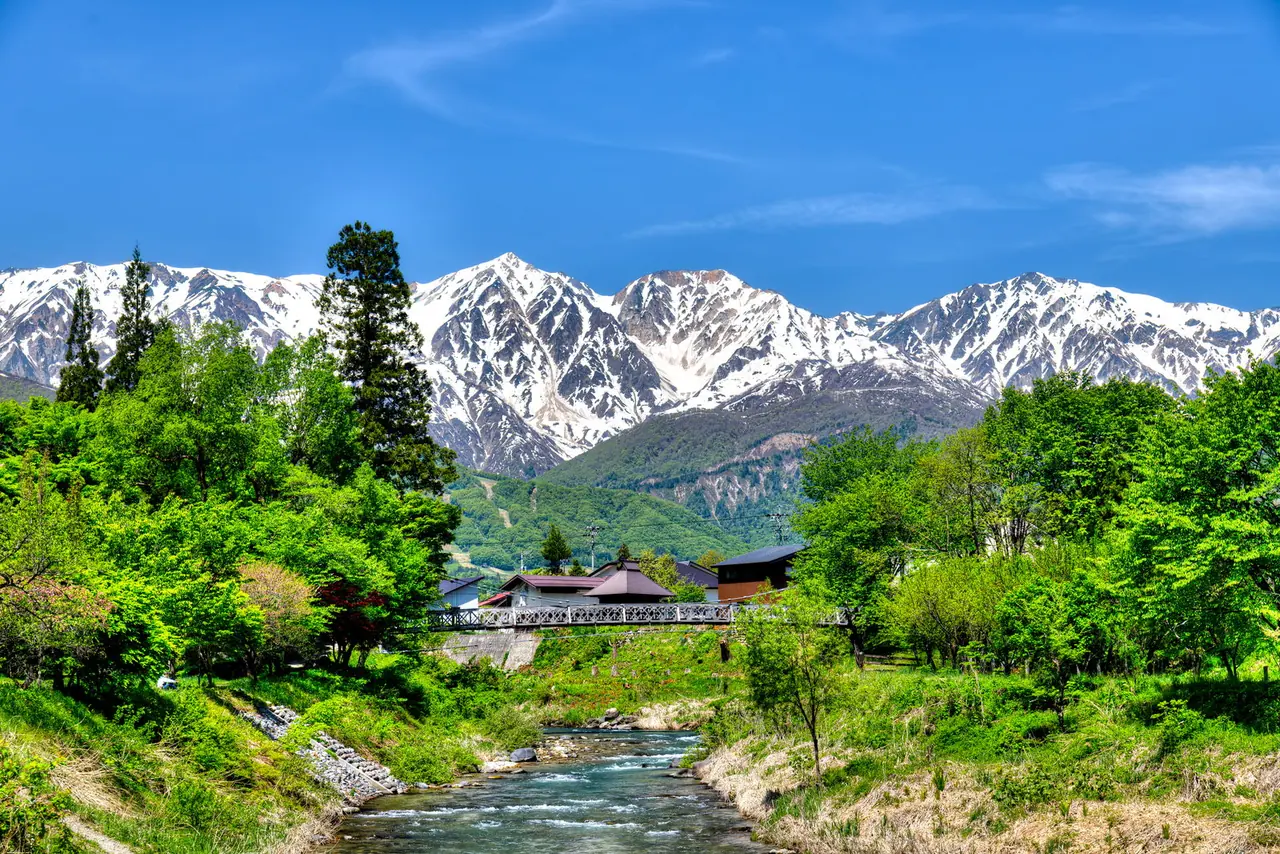

Skis and suitcases
- Demand taxi: no skis, snowboards or large bags.
- Alpico express buses: skis and snowboards go in the luggage hold if they are in a cover. Alpico charges nothing for hold luggage and sets no limit on the number or size of bags, but asks you to keep to what you need. You load and unload your own bags, and power banks must stay with you on board.
Yamato's TA-Q-BIN delivery takes parcels up to 200 cm (length + width + height) and 30 kg. From the Kanto area (Tokyo included) to Nagano Prefecture, the cash rate is ¥2,630 for a 140-size parcel, ¥3,020 for 160 and ¥3,680 for 180 (rates checked October 16, 2026; cashless payment is a little cheaper). Four 160-size suitcases, for a group of four, come to ¥12,080 one way at the cash rate. Deadlines and ski bags are in my guide to sending skis and suitcases.
Estimated transport costs
Only fares confirmed on official pages are listed. "—" means the fare is not confirmed: not published, or not yet published for 2026–27.
| Item | One way | Season |
|---|---|---|
| Nagano → Hakuba Happo, express bus | ¥2,900 | Until Nov 30, 2026 |
| Nagano → Hakuba, express bus | — | Winter 2026–27 |
| Hakuba → Nagano, express bus | — | Any season |
| Line V shuttle, per ride | ¥800 (2025–26) | Ski season |
| Line V shuttle with a Day Pass | ¥0 (2025–26) | Ski days |
| Demand taxi, per ride | ¥300 | All year, 8:00 – 17:00 |
| Suitcase by TA-Q-BIN, Kanto → Nagano, 160 size (cash) | ¥3,020 | All year |
Example, one person, a week in November 2026: six demand-taxi rides cost 6 × ¥300 = ¥1,800. With the bus from Nagano (¥2,900) and one suitcase sent from Tokyo (¥3,020), the total is ¥2,900 + ¥1,800 + ¥3,020 = ¥7,720 (≈ US$49). Not included: the Shinkansen, the bus back to Nagano (fare not confirmed for that direction), any taxi rides and the suitcase's return trip.
Converted at ¥158.24 = US$1 (European Central Bank reference rates for October 19, 2026), checked October 20, 2026.
In winter 2025–26, a Day Pass made Line V free on ski days; the bus fare for 2026–27 is the main cost still unknown.
Where to stay without a car
In 1937, 16 households in Hosono began taking in guests as minshuku, family-run guesthouses. Whatever kind of place you choose, pick it by its distance to a stop, not by the ski area alone. My guide to where to stay in Hakuba compares the areas one by one.
- Near Hakuba Happo bus terminal: the Nagano express bus stops here, so the trip from the Shinkansen needs no taxi.
- Near Hakuba Station: the Oito Line, the Azusa 5 from Shinjuku and the taxi stand are here, and the Nagano express bus stops here on its current timetable.
- Near Hakuba Goryu: the Nagano express bus stops at Hakuba Goryu and Goryu Escal Plaza, drop-off only toward Hakuba. In 2025–26 Hakuba Goryu ran a free shuttle for its ski guests.
- Up a side road: check how far it is to the nearest demand-taxi stop and shuttle stop. The demand taxi runs only between set stops in the daytime and takes no skis, so you may need a booked taxi; leave spare time before a train or bus.

Seasons in Hakuba
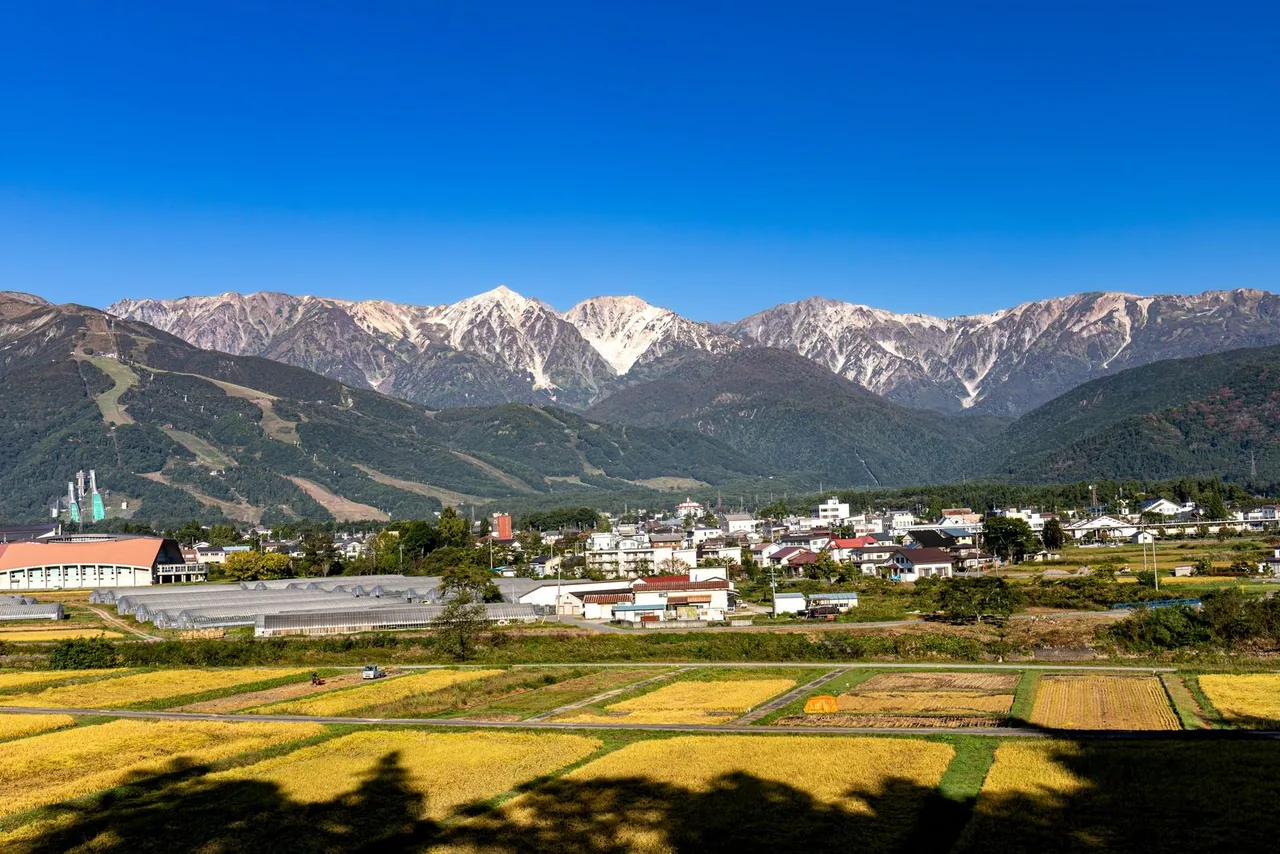
At the Japan Meteorological Agency's Hakuba station, the 1991–2020 normals give 655 cm of snowfall a year and an average yearly maximum snow depth of 100 cm (97 cm in February).
- Ski season 2026–27: Hakuba Valley expects its ski areas to open in December 2026 and close between March and early May 2027, depending on the area (dates planned). For a trip early in the season, see my guide to Hakuba in December.
- Green season: the Happo Alpenline runs from June 6 to November 3, 2026.
Summer and winter compared
| What you need | April – November | Winter (2025–26 pattern) |
|---|---|---|
| Nagano → Hakuba express bus | Runs; no reservation | Reserved and non-reserved buses |
| Matsumoto → Hakuba direct bus | No service | Once a day, reserved seats |
| JR Oito Line from Matsumoto | Runs all year | Runs all year |
| Shuttles between ski areas | None | Hakuba Valley lines; some free resort shuttles |
| Shared demand taxi (¥300) | 8:00 – 17:00 daily | New since Apr 2026; no skis |
| Taxi | Phone booking; stand at Hakuba Station | Same |
April to November without a car
From April to November the trip is simpler than in winter:
- Nagano bus: no reservation; ¥2,900 to Hakuba Happo on the fare table planned to run until November 30, 2026.
- Oito Line: through trains from Matsumoto as above (November 2026 timetable); check the timetable for your travel date.
- In the village: the Hakuba Valley ski shuttles do not run, so the ¥300 day demand taxi (8:00 – 17:00) and booked taxis are the ways to get around.
- Not covered here: summer lift, gondola and sightseeing bus timetables, which this guide has not checked yet.
How I checked this
- I read the timetables, fare tables and rules on the operators' own pages: Alpico, JR East, Hakuba Village, Hakuba Valley, Hakuba Goryu, Happo-one and Yamato.
- I checked each time and fare against those pages between October 15 and 20, 2026.
- Where the 2026–27 winter details had not been published, I used last winter's pages and marked those figures 2025–26.
- I converted yen to US dollars at the European Central Bank reference rate for October 19, 2026.
- For snow, I used the Japan Meteorological Agency's 1991–2020 normals for its Hakuba station. Sources: Alpico Kotsu; JR East; Hakuba Village; Hakuba Valley; Hakuba Goryu; Happo-one; Japan Meteorological Agency; Yamato Transport
- The 2026–27 winter timetable and fare of the Nagano – Hakuba express bus.
- Whether the Matsumoto – Hakuba direct bus runs in winter 2026–27.
- The 2026–27 Hakuba Valley shuttle dates, fares and timetable.
- The winter night demand taxi for 2026–27, and whether app ride-hailing such as Uber is offered in Hakuba.
- Direct buses from Tokyo.
- Summer lift, gondola and sightseeing bus timetables in Hakuba.
- Whether any houses are listed on Hakuba's akiya bank now.
I will update this page when the operators and the village publish them.
Getting to Hakuba from Tokyo or Osaka
Shinkansen to Nagano (from 1 hr 17 min), then the Alpico express bus to Hakuba (1 hr 10 min – 2 hr 5 min, by stop). Or the Azusa 5 from Shinjuku: every day, 3 hr 40 min, no change.
Shinkansen to Nagoya, then the Shinano limited express to Matsumoto and the Oito Line to Hakuba. On weekdays the Shinano 3 leaves Nagoya at 8:00 and connects to the Azusa 5, which reaches Hakuba at 11:40 (times differ on a few dates).
Frequently asked questions
How do I get to Hakuba without a car?
Take the Hokuriku Shinkansen to Nagano, then the Alpico express bus from Nagano Station's east exit to Hakuba Happo (¥2,900 on the timetable planned to run until November 30, 2026; 1 hour 10 minutes to 2 hours 5 minutes, depending on the stop). From Matsumoto, the JR Oito Line runs to Hakuba Station. In the November 2026 timetable, the Azusa 5 limited express also runs every day from Shinjuku to Hakuba without a change.
Do I need to reserve the bus from Nagano to Hakuba?
Not from April to November: on the spring-to-autumn timetable you buy a ticket at the counter or on board. Last winter (December 13, 2025 – March 31, 2026) Alpico ran both reservation-only buses, booked online at least 30 minutes before the bus left its first stop, and non-reserved buses, most of which ran non-stop between Nagano Station and Hakuba Happo. The 2026–27 winter rules had not been published on October 20, 2026.
How much is the bus from Nagano to Hakuba?
¥2,900 one way to Hakuba Happo and ¥3,200 to Tsugaike Kogen or Hakuba Norikura, on the spring-to-autumn fare table planned to run until November 30, 2026. The winter fare is not confirmed yet.
Is there a free shuttle bus in Hakuba?
Some were free in 2025–26. Hakuba Goryu ran a free shuttle for its ski guests (December 13, 2025 – March 31, 2026). The Hakuba Valley Line V shuttle cost ¥800 per adult ride, but holders of a Hakuba Valley Day Pass or all-mountain season pass rode it free on the days they skied. The 2026–27 shuttle dates and fares had not been posted on October 20, 2026.
How much snow does Hakuba get?
At the Japan Meteorological Agency's Hakuba station, the 1991–2020 normals give 655 cm of snowfall a year and an average yearly maximum snow depth of 100 cm, deepest in February (97 cm). Snow falls mainly from December to March.
Can I get a taxi or use Uber in Hakuba?
Yes. Alpico Taxi has an office in Hakuba (phone +81 261-72-2236) and a taxi stand at Hakuba Station. Hakuba Village also runs a shared demand taxi between 93 set stops in the village, booked in an app, for ¥300 a ride from 8:00 to 17:00 every day. Skis and snowboards are not allowed in the demand taxi. Whether app ride-hailing such as Uber is offered in Hakuba in 2026–27 is not confirmed.
Keep planning
Could you live in Hakuba?
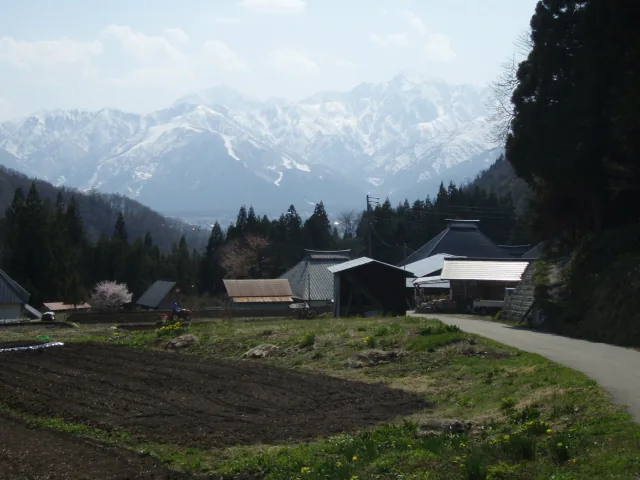

Picture a year here instead of a week: the first snow settling on the peaks, the slopes going quiet in spring, the same mountains outside the window every morning. If you can see yourself here, read on.
In Iiyama, in northern Nagano, the akiya bank had houses asking a few million yen, or tens of thousands of dollars, in October 2026, posted in Japanese. The Akiya Letter will send new houses from towns like this one in English, with a link to the town's own page.
I’m preparing guides to akiya — Japan’s empty houses — in the Hakuba area: how the village’s akiya bank works, what an old house costs in its first year and what to check before the first winter. If you’d like to live here one day, join the waiting list.
Official pagesHakuba relocation page (Japanese) ↗ · Hakuba akiya bank (Japanese) ↗
Sources
- Nagano – Hakuba express bus — Alpico Kotsu
- Nagano – Hakuba fare table (spring to autumn) — Alpico Kotsu
- Nagano – Hakuba winter timetable 2025–26 — Alpico Kotsu
- Nagano – Hakuba winter buses 2025–26 (English) — Alpico Kotsu
- Matsumoto – Hakuba express bus — Alpico Kotsu
- Matsumoto – Hakuba winter bus 2025–26 (timetable and fares) — Alpico Kotsu
- Oito Line timetable from Matsumoto (November 2026) — JR East
- Local train 5329M, Matsumoto 9:20 – Minami-Otari — JR East
- Local train 5333M, Matsumoto 11:09 – Minami-Otari — JR East
- Limited express Azusa 5 (Shinjuku – Hakuba) — JR East
- Limited express Azusa 5, Saturdays and holidays — JR East
- Limited express Azusa 83 (Hakuba Express), winter — JR East
- Hokuriku Shinkansen timetable from Tokyo (November 2026) — JR East
- Limited express Shinano 3 (Nagoya – Nagano) — JR East
- Bus luggage rules (skis, snowboards, bicycles) — Alpico Kotsu
- Hakuba Valley shuttle bus — Hakuba Valley
- Access and free shuttle bus (winter) — Hakuba Goryu
- Hakuba day demand taxi — Hakuba Village
- Taxi stands and phone numbers — Alpico Taxi
- About Hakuba (history and the 1998 Olympics) — Hakuba Village
- About Hakuba Valley — Hakuba Valley
- Hakuba Valley season pass 2026–27 — Hakuba Valley
- Happo Alpenline green season 2026 — Happo-one
- Hakuba normals 1991–2020 (snowfall and snow depth) — Japan Meteorological Agency
- Moving to Hakuba — Hakuba Village
- Akiya and vacant land bank — Hakuba Village
- Train status, Shinetsu area (English) — JR East
- Express bus service status — Alpico Kotsu
- Hakuba-area bus service status — Alpico Kotsu
- TA-Q-BIN size limits — Yamato Transport
- TA-Q-BIN rates from the Kanto region — Yamato Transport