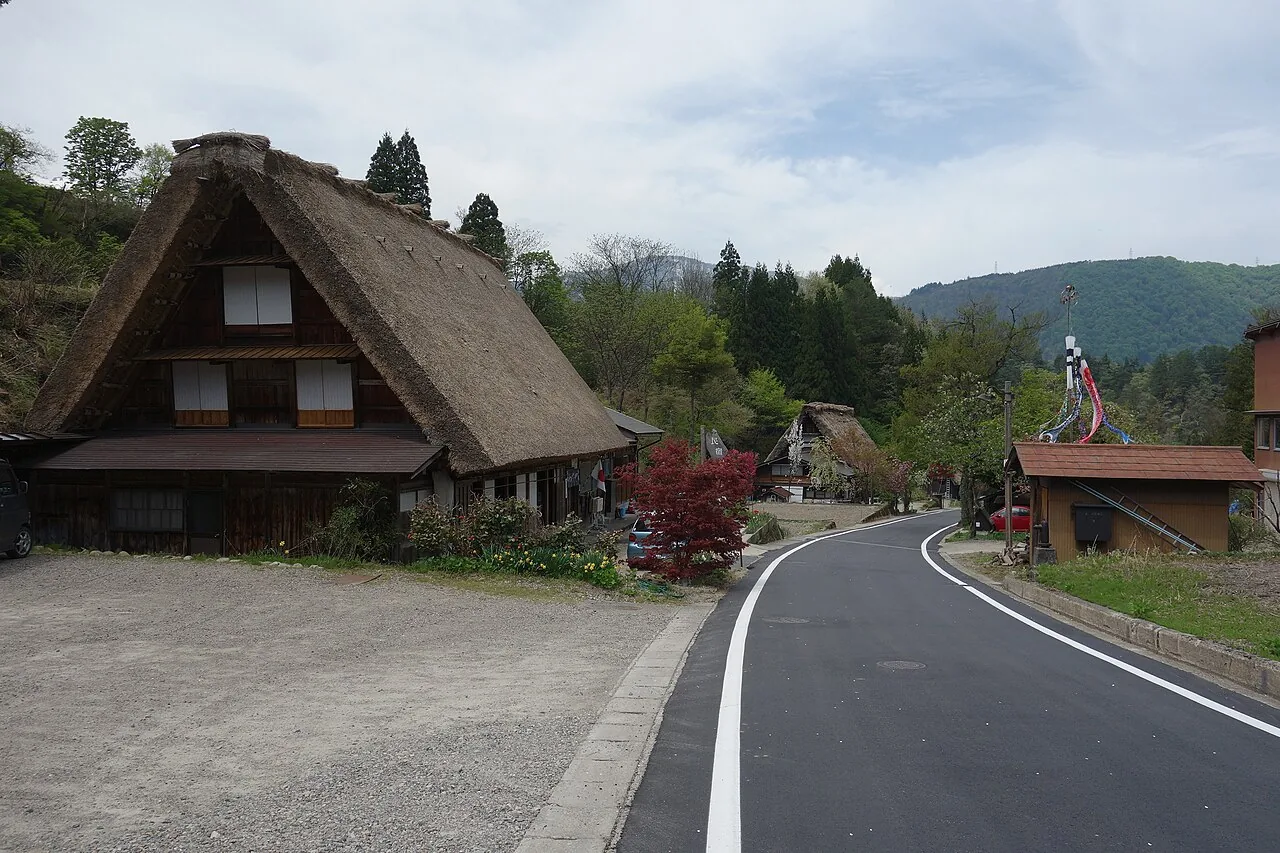
A gassho-style house in Shirakawa-go. Photo: 690 Noda / Wikimedia Commons / CC BY 3.0

- A minshuku is a small, often family-run inn in the owner's home, usually with tatami rooms and futons, and often with shared bathrooms. JNTO describes it as moderately priced.
- A ryokan is a traditional inn where a multi-course kaiseki dinner is typically included and many have hot-spring baths.
- In Shirakawa-go, the tourism association books gassho-style houses online, from about 3 months ahead; some have only 2 or 3 rooms.
This guide contains affiliate links, marked "(affiliate)." I hope it helps your trip.
Book Shirakawa-go's gassho houses through the tourism association, about 3 months ahead.
The houses are small, some with 2 or 3 rooms, so they fill early.
If they are full, the association points you to other booking sites.
- 1Shirakawa-goTourism association's online booking
- 2Magome8 places on the tourism association's list
- 3TakayamaFilter the association's search for minshuku
A minshuku is a small, often family-run inn. In the Japanese Alps you find them in places like Shirakawa-go and the old post towns on the Nakasendo. This guide explains how it differs from a ryokan, what to expect when you stay, and how to book one through the local tourism associations. For the villages themselves, see my Shirakawa-go guide, and for the whole region my Japanese Alps without a car guide.
Minshuku vs ryokan
| Minshuku | Ryokan | |
|---|---|---|
| Who runs it | Often a family, in their home | A traditional inn |
| Room | Often tatami and futon | Tatami, futon, yukata |
| Bathroom | Often shared | Some rooms have their own |
| Dinner | Ask the inn | Kaiseki typically included |
| Bedding | You usually put it away | — |
| Price | Moderate, for budget travelers | Depends on the inn and plan |
The minshuku column is from JNTO's minshuku page and the ryokan column from its ryokan page. JNTO's minshuku page does not cover meals.
- Minshuku: JNTO describes them as often family-run, guesthouse-style lodgings in the owner's home, often in rural areas or near resorts, similar to a bed and breakfast.
- Ryokan: JNTO says a stay typically includes a multi-course kaiseki dinner made with local, seasonal ingredients, and that many ryokan have hot-spring baths. For ryokan you can reach without a car in Takayama, see my Takayama ryokan guide.
In the Japanese Alps, minshuku have a long history: Hakuba Village says 16 households in Hosono started taking guests as minshuku in 1937.
What to expect at a minshuku
- Shoes off: you take your shoes off indoors, as JNTO notes for traditional inns.
- Bathroom: often shared with other guests.
- Bedding: in the morning you usually put your own futon away.
- Small houses: in Shirakawa-go, Kidoya lists 3 guest rooms and Yoshiro 2 to 3.
- Food: Kidoya says it serves wild seasonal vegetables and river fish.
- Times: both list check-out by 9:00. Check-in is from 15:00 at Kidoya and from 14:00 at Yoshiro.
- Whether dinner and breakfast are included at Kidoya and Yoshiro, and the price
- Payment methods at each inn
- Bath times
How to book a minshuku in Shirakawa-go
How I checked this
- Go to the Shirakawa-go Tourist Association's Stay page and search for a free room by date and number of guests.
- Book from about 3 months ahead. The houses are small, so popular dates fill early.
- If the houses are full, the association points you to other booking sites.
- Questions go to the association, +81-5769-6-1013, 9:00 to 17:00.
The association's list has 41 places of all types. Gassho-style houses on it include Hakusanso, Bunroku, Rihee, Nodaniya, Yoshiro and Kidoya. Kidoya is about 10 minutes on foot from the Shirakawa-go bus terminal and Yoshiro about 9; Kidoya also takes bookings by phone, +81-5769-6-1077.
Minshuku in Magome and Tsumago
The Magome Tourist Association lists 8 places to stay in Magome, including Hatago Tawaraya, Tajimaya, Shirakiya and Guesthouse Nedoko. If you walk the trail between Magome and Tsumago, a luggage service carries bags between the two towns; see my Magome to Tsumago hike guide.
Minshuku in Takayama
The Hida Takayama tourism association's accommodation search has a category for minshuku, pensions and guesthouses. Filter for the city center if you travel without a car. For ryokan, hotels and the area around the station, see my Takayama guide.
Rooms in central Takayama: see places to stay around Sanmachi (affiliate)
Frequently asked questions
What is the difference between a minshuku and a ryokan?
A minshuku is a small, often family-run inn in the owner's home, usually with shared bathrooms, where you put your own bedding away in the morning. A ryokan is a traditional inn where a kaiseki dinner is typically included and many have hot-spring baths. Both usually have tatami rooms and futons.
Is a minshuku cheaper than a ryokan?
JNTO describes minshuku as moderately priced and aimed at budget travelers. Prices depend on the inn and the plan, so compare the plans you are offered.
How do I book a minshuku in Shirakawa-go?
Through the Shirakawa-go Tourist Association's website, which takes bookings from about 3 months ahead. If the houses are full, it points you to other booking sites. Its phone line is +81-5769-6-1013, 9:00 to 17:00.
Do minshuku have private bathrooms?
Often not. JNTO says bathroom facilities at minshuku are often shared. Check the room description before you book.
What time is check-out at a minshuku?
It varies. Two gassho-style houses in Shirakawa-go, Kidoya and Yoshiro, list check-out by 9:00. Honjin Hiranoya, a ryokan in Takayama, lists 11:00.
Keep planning
Sources
- Minshuku and Guesthouses in Japan — JNTO
- Japanese ryokan — JNTO
- Stay — Shirakawa-go Tourist Association
- FAQ: booking a stay — Shirakawa-go Tourist Association
- Kidoya — Shirakawa-go Tourist Association
- Yoshiro — Shirakawa-go Tourist Association
- Places to stay — Magome Tourist Association
- Accommodation search (archived copy) — Hida Takayama Tourist and Convention Association
- Access — Honjin Hiranoya
- About Hakuba — Hakuba Village
- Luggage forwarding between Magome and Tsumago — Tsumago Tourist Association